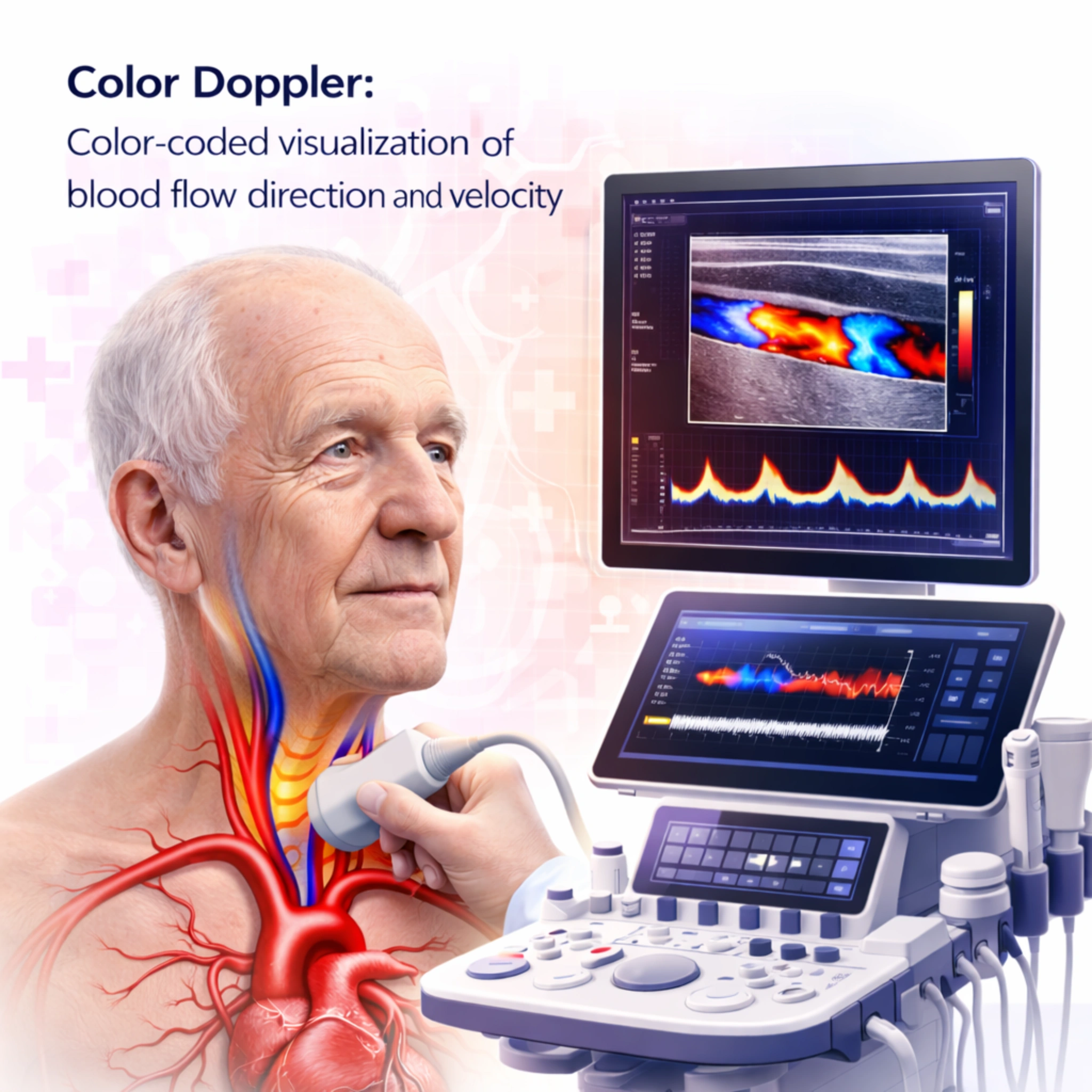
What is Doppler Ultrasound?
Doppler ultrasound is a specialized ultrasound technique that uses the Doppler effect to measure and visualize blood flow through vessels. Unlike conventional ultrasound which creates images of anatomy, Doppler studies measure the velocity and direction of blood flow, providing crucial information about vascular health and function.
How Does Doppler Ultrasound Work?
The Doppler effect occurs when sound waves reflect off moving red blood cells. As blood flows toward the ultrasound probe, the sound waves return at a higher frequency. Conversely, blood flowing away from the probe returns at a lower frequency. These frequency changes are converted into audio signals and visual displays that allow specialists to evaluate blood flow characteristics.
Types of Doppler Studies:
- ✓ Color Doppler: Color-coded visualization of blood flow direction and velocity
- ✓ Spectral Doppler: Detailed waveform analysis of blood flow patterns
- ✓ Power Doppler: Enhanced sensitivity for detecting low-velocity blood flow
- ✓ Carotid Artery Doppler: Assessment of blood supply to the brain
- ✓ Venous Doppler: Evaluation for deep vein thrombosis and vascular insufficiency
- ✓ Umbilical Artery Doppler: Fetal well-being assessment during pregnancy
Clinical Applications
Doppler ultrasound helps diagnose various vascular conditions including deep vein thrombosis, arterial stenosis, carotid disease, and peripheral vascular disease. In pregnancy, umbilical artery Doppler studies assess fetal well-being and placental function. Cardiac Doppler evaluates heart valve function and blood flow patterns.
Advantages of Doppler Imaging
Doppler ultrasound is non-invasive, uses no radiation, is cost-effective, and provides real-time assessment of blood flow. It can be repeated as often as needed without risk to the patient, making it ideal for monitoring chronic vascular conditions and pregnancy complications.
Need a Doppler Study?
Our expert sonographers specialize in comprehensive Doppler studies.
Schedule Your Ultrasound